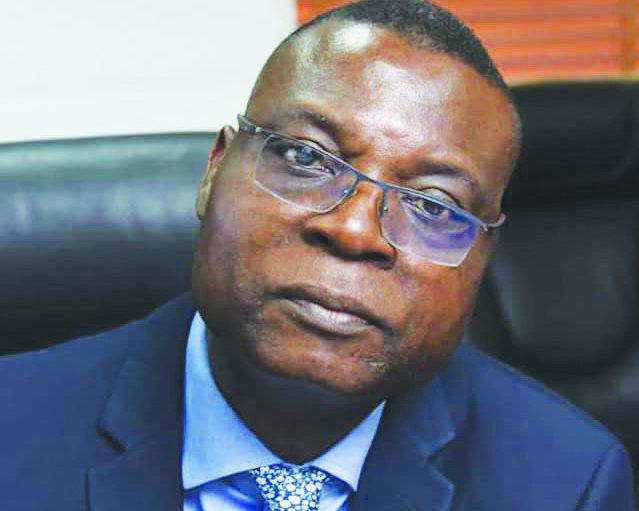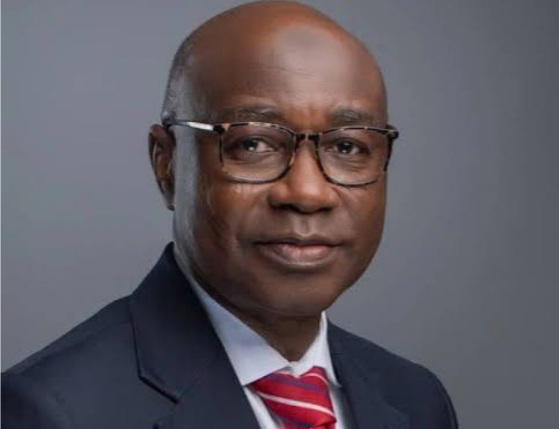
The President and Chairman of the Governing Council of the Chartered Institute of Personnel Management of Nigeria (CIPM), Mallam Ahmed Ladan Gobir, FCIPM, fnli has called for a fundamental transformation of Nigeria’s public service, anchored on innovation, accountability, participation, inclusion and strategic people management.
The CIPM President made the call while delivering the keynote address at the Ogun State 2026 Public Service Day Celebration Lecture, held at the Cultural Centre, Kuto, Abeokuta, on Thursday, August 13, 2026. The lecture was themed “Transforming the Public Service: Advancing Innovation, Accountability, Participation and Inclusion.”
Speaking to public and civil service leaders, scholars, organised labour, private-sector representatives and other stakeholders, Gobir emphasised that the ultimate purpose of public service is not merely to process paperwork, but to improve citizens’ lives.
He noted that citizens experience government primarily through the quality of public services they receive, stressing that “Government is an idea. Public service is its experience.” He therefore urged public institutions to move beyond measuring activity and processes to measuring the actual value and impact delivered to citizens.
According to him, innovation in the public service must go beyond simply digitising existing processes. He cautioned against “digitising dysfunction”, noting that technology cannot compensate for institutions that have failed to rethink inefficient processes.
He challenged public-sector leaders to ask whether existing procedures still create public value and encouraged institutions to redesign processes around citizens’ needs rather than institutional convenience.
On accountability, the CIPM President described it as “the mathematics of trust,” emphasising that public institutions must earn citizens’ confidence through competence, fairness, transparency, consistency and responsiveness.
He also stressed the importance of meaningful citizen participation, noting that participation should go beyond inviting citizens to events after decisions have already been made. Rather, citizens should have opportunities to influence decisions that affect their lives.
On inclusion, Gobir called for public services to be designed to accommodate citizens across different socioeconomic, geographic, technological and demographic circumstances. He warned that a service cannot be considered truly inclusive if it is technically available but practically inaccessible to significant segments of the population.
The CIPM President further highlighted the critical role of human resource management in public-sector transformation, noting that no institution can transform beyond the capacity of its people.
He called for a strategic approach to talent management, leadership development, performance management and capability building within the public service.
“The greatest infrastructure of a nation is not concrete. It is capability. Only capable people move institutions.”
He urged public-sector organisations to build workplaces where competence, integrity, innovation and excellence are recognised and rewarded, while challenging leaders to develop the right people and capabilities for emerging public-sector needs.
Speaking specifically on Ogun State, Gobir acknowledged the state’s development ambitions and encouraged it to pursue a model of transformation that goes beyond infrastructure and technology to focus on building institutions that are responsive, effective and centred on citizens.
He distilled the lecture’s theme into four key imperatives: innovation must change the method; accountability must change the culture; participation must change the relationship between government and citizens; and inclusion must change the architecture of public service.
He added that leadership remains central to achieving all four imperatives, stressing that institutions do not transform themselves—people transform institutions, and leaders determine whether those people are empowered, constrained, inspired or ignored.
The CIPM President concluded by calling for a public service where innovation becomes an institutional habit, accountability becomes a professional ethic, participation becomes consequential and inclusion becomes a design principle.
He said the ultimate measure of public-sector reform should not be the number of policies or projects launched, but the number of lives improved and the extent to which citizens can access government services without unnecessary friction.
“The ultimate measure of institutional reform will not be the number of policies launched. It will be the number of lives improved,” he said.
The engagement reinforces CIPM’s commitment to advancing professional human resource management and supporting stronger, more capable and people-centred institutions across Nigeria.