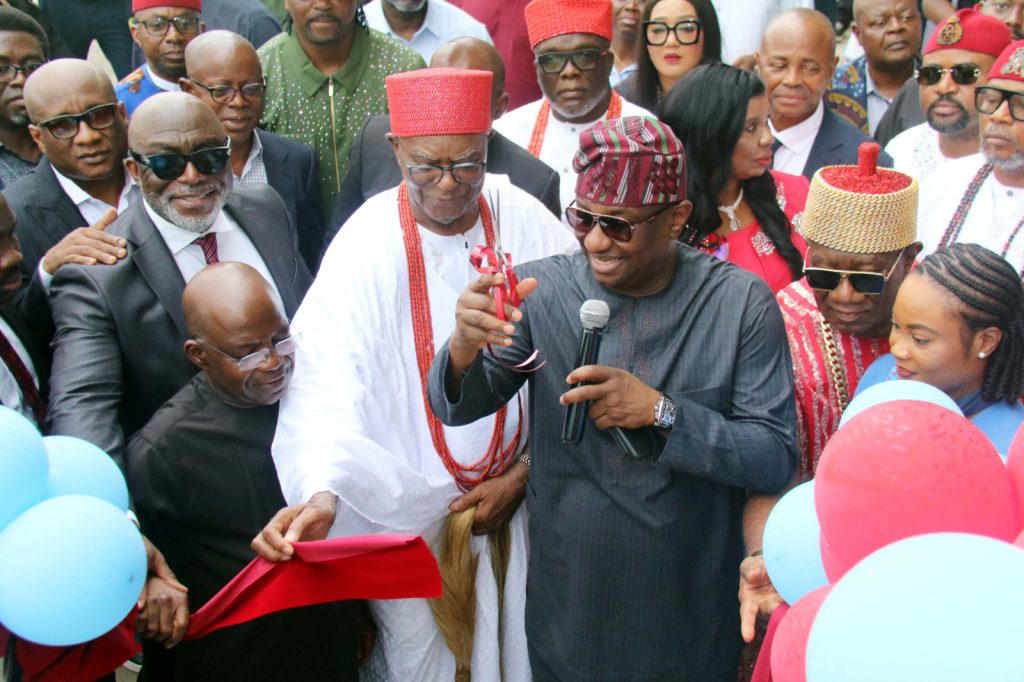
Nigeria’s sports sector came under the spotlight on Thursday in Abuja as leading stakeholders, policymakers, administrators and former athletes gathered for the public presentation of a new book, Perspectives on Sports Development in Nigeria: Challenges and Ways Forward, authored by sports psychologist and administrator, Dr Emmanuel Edem Ekpeme.
The event, which attracted prominent figures from government and the sporting community, provided a platform for renewed discussions on the future of sports development in the country, with speakers calling for greater investment, stronger governance structures and sustained reforms.
Chairman of the occasion and Minister of State for Industry, Trade and Investment, John Enoh, used the opportunity to reflect on his tenure as Minister of Youth and Sports Development, highlighting some of the challenges and reforms undertaken during his time in charge of the sector.
Enoh said any future memoir he writes would include a significant chapter on the period he spent overseeing Nigerian sports, recalling both the disappointments and the efforts made to reposition the industry.
“I think that when I put together my memories, there will definitely be a chapter in the book about the one year and some months I spent as Minister of Youth and Sports Development,” he said.
According to him, that chapter would not only recount Nigeria’s disappointing return from the Paris Olympics without a medal but would also document key reforms initiated during the period.
He noted that for the first time in several years, athletes received their entitlements before competitions, while efforts were also made to tackle long-standing administrative challenges within the sector.
Enoh further recalled the credibility crisis Nigeria faced over anti-doping issues, which led to international concerns and threatened the country’s participation in global sporting events.
He said decisive actions were taken to restore confidence in Nigerian sports, including the establishment of a stronger legal framework that culminated in the anti-doping legislation.
“We took profound steps to get Nigeria out of the woods and out of international isolation,” he stated.
Describing the book launch as more than a ceremonial event, Enoh said the publication represented an important contribution to a national conversation that touches virtually every Nigerian.
“This is not merely a book launch. It is a presentation of thoughtful contributions to one of the most important conversations in our national life,” he said.
The minister stressed that sports should no longer be viewed solely as recreation but as a viable economic sector capable of driving youth development, job creation and national unity.
He commended corporate organisations and private-sector investors for their continued support of sports development and urged governments at all levels to move beyond emergency funding and last-minute interventions.
“Our duty must go beyond emergency funding for tournaments. We must treat sports as social infrastructure and a platform for youth development,” he added.
Reviewing the 373-page publication, Professor Olufemi Adegbesan described the work as a comprehensive and scholarly examination of Nigeria’s sports ecosystem.
He praised Dr Ekpeme’s contributions to sports psychology and noted that his expertise had positively impacted national teams, including the Super Falcons and the Super Eagles.
Adegbesan said the book provides a detailed exploration of the historical evolution of sports in Nigeria, institutional frameworks, governance challenges, funding gaps, talent development and anti-doping issues.
According to him, the publication goes beyond identifying problems by offering practical, evidence-based recommendations and a strategic roadmap for policymakers and stakeholders.
He highlighted several chapters of the book, including discussions on football development, athletics, basketball, governance structures and the evolution of sports administration in Nigeria.
Chairman of the National Sports Commission, Shehu Dikko, also praised the author for producing a work that clearly identifies the sector’s challenges and proposes realistic solutions.
Dikko said many of the recommendations align with ongoing reforms being pursued by the commission.
He pointed to President Bola Tinubu’s decision to restore the National Sports Commission as a major step towards professionalising sports administration and reducing bureaucracy.
“The president made the bold decision to reset sports by bringing back the National Sports Commission,” he said.
Dikko emphasised that sustainable success in sports requires deliberate planning and significant investment, noting that the world’s leading sporting nations have achieved their status through consistent commitment and funding.
Former Cross River State Governor, Liyel Imoke, described the turnout at the event as evidence of the respect Dr Ekpeme enjoys within the sporting community.
“You brought the who’s who of the industry into this room, and that’s unprecedented,” Imoke said.
He commended the author’s longstanding contributions to sports development and expressed optimism about the future of Nigerian sports.
“With people like you, there is hope for sports in Nigeria,” he added.
The launch concluded with widespread commendation for Dr Ekpeme’s work, with participants describing the book as a valuable reference material that could help shape future policies and reforms aimed at unlocking the immense potential of Nigeria’s sports industry.