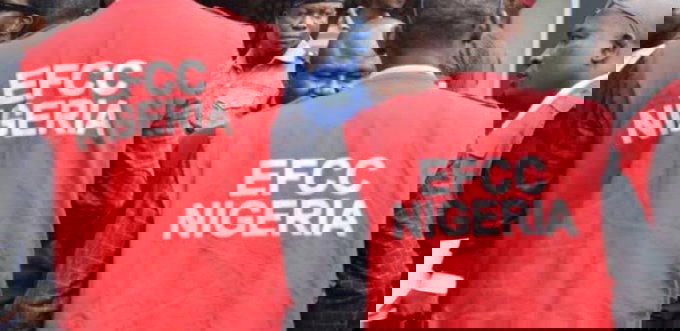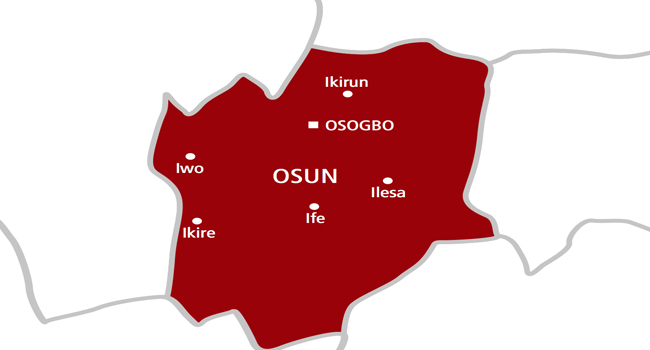
The matter of the moment in the last couple of days has been the rift between the Osun state government and the Economic and Financial Crimes Commission EFCC. While Nigerians have continued to comment on the subject, a major gain of the nation is the people’s realization that if their president is careful and observant, he can easily become personally conscious of public opinion. President Bola Ahmed Tinubu passed that simple exam of the week by intervening in the EFCC-Osun rift. The strategic intervention has not only soaked the political tension in Osun; it has dramatically converted the tension into a debate for all comers sending political jobbers back to the drawing board to find new controversies to create.
Tinubu must take advantage of the gain by staying away from relying on only the version of a story told by allies, aides and supporters. For each controversy, a leader must seek to comprehend all the dimensions of the stories he is told. Before Tinubu, a few presidents relied on the one-sided story at the expense of their image. For example, President Jonathan should not have relied entirely on a supposed technical advice to change his plan to personally visit Chibok. If a president who is armed to the teeth is dissuaded by men of technical and security expertise from visiting a troubled spot, what does he expect the public to feel and into what use is he expected to put his gamut of security convoy? We submit that there is always a difference between technicality, law and politics.
It is against this backdrop that the decision of President Tinubu to put a pause on EFCC’s action in Osun state ought to be interrogated. I have watched many colleagues on national television marshalling several points to disagree with the intervention. Some of their arguments especially the legal options they have raised are no doubt quite persuasive but President Tinubu’s intervention was not designed to deal with a legal topic. The argument that he should have left the matter to his Attorney General establishes clearly that the commentators had made up their minds that it is only through law that matters are resolved which is not true. I want to believe that whereas the commentators were looking at the letters of the law, the president was thinking of the spirit of the law.
Law to my mind is useless if its handling cannot prevent the dismemberment of society. Those of us who think Tinubu’s intervention was not bad are not in any way suggesting that EFCC was pursuing any hidden or illegal agenda. Indeed, we are strong among those who have found cause to commend the current leadership of that reformed anti-corruption agency. So much has changed there; prosecution has improved, convictions have increased while it has embraced an effective inter-agency synergy that is yielding great positive results. We also agree with the argument that the EFCC was acting within its legal mandate in its Osun mission. The point to be made therefore is that it is simplistic to see the president’s intervention as evidence that the EFCC did some wrong.
What appears to have unsettled the president was not EFCC’s work but the public opinion that the agency was being used to destabilize a sitting state government so as to empower the political party of the president to take over the state. Almost every Nigerian believes this which the state concerned has helped to amplify across all digital media organs. Even the EFCC would be shocked to learn that some of its staff do not only feel so but may have confirmed it privately to their friends and family. What this suggests is that most people must have imagined that it was the president who may have directed the EFCC to do the hatchet job on Osun state especially as he was quoted to have said recently that all is fair in politics.
With only a few months away to his own re-election bid, there is no way Tinubu would have adopted the option of ‘silence is golden’ and allow the damaging public opinion to take root. The president actually has many more interventions to make to reduce the unduly high degree of politicisation of Nigeria. In the last decade, the only industry flourishing in our country is politics. It has become so attractive that people are prepared to kill to get into office. Painfully, threats are carried out using the privileges of public office. Members of the ruling party at the national level are usually able to access the instruments of coercion to perpetrate violence. The president must therefore intervene to halt the trend whereby people in government often seek to overwhelm members of the opposition. That is not democracy
It is worse when the opposition in a state such as Osun is seen by the public as strong enough to overpower a state government – a development that is likely to happen only through the help of federal power. If the same overpowering opposition party in a state wins the next election, no one is likely to believe that it was through the ballot. There is therefore no better time than now for President Tinubu to put a halt to the belligerence in Osun or any such state. The idea of a ruling party losing at the polls happens all over the world. But it usually happens when an opposition has better ideas or more charismatic candidates who are able to persuade voters. It is time to stop the victories attained in our clime through the force of law or fraudulent systems. In particular, let’s stop the show of force in the states by Abuja-based politicians.
Perhaps, one way of doing this is to alter our attitude to elections. About a decade ago when the current ruling APC was in the opposition, it went to court to stop the use of the military in our elections. The court ruled in its favour; yet, the involvement of the military in elections in Nigeria is increasing. Who usually approves the release of the military to our election merchants and into what use do they put them? Why do we require soldiers to be part of our elections when we keep saying the worst democratic government is better than the best military dictatorship? Is our election so tense that we need more than the Police? Is it not strange that security agencies are even more active in non-chaotic segments like collation of votes?
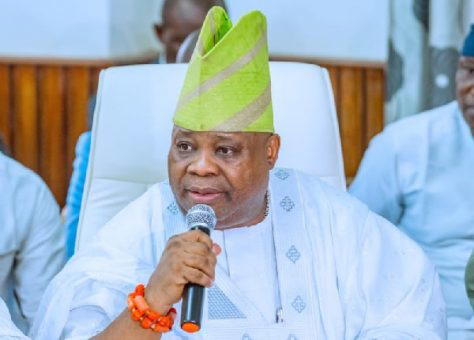
Answers to the above posers may help us understand the direction of the Osun governorship election which is just a few days away. For me, as an independent election observer, I will always remember the Osun Governorship election which took place on Saturday, September 22, 2018. The current governor, Ademola Adeleke was also the leading candidate at the time but INEC refused to declare him the winner because of certain issues in about 7 polling units. According to the electoral body, the election was inconclusive – a popular title at the time, so a rerun was fixed for Thursday September 27, 2018. During the rerun which INEC announced was won by the ruling party rather than the leading candidate, both voters and election observers were harassed by security agencies to achieve a predetermined goal. The US, EU and UK observers reported irregularities and interference by inappropriate persons in the election.
As we are set to re-enact the old 19th Century battle of Osogbo 1840, there is need to caution politicians to let the contest be determined by voters rather than by top politicians who would converge on the state to ensure their party wins by whatever method. If that is allowed, it would be a bigger stain to wash than stopping the EFCC that would have evidence to justify its actions. This is why we call on the President today to take the same step he took concerning the EFCC to warn INEC to be diligent in handling the coming Osun election. He should also send a strong appeal to his own party members especially their “inter-state professional players” to allow Osun APC members run the show in line with the rules set for the game. A ruling party is usually a big party with all manner of members – wealthy chieftains, gentlemen, fraudsters etc.
In its days, PDP had specialized riggers, most of whom have since defected to their successor party. Whoever can counsel such riggers to allow us have credible election would have done so much service to the fatherland. This is because it is only from credible elections that we can source visionary leaders who would formulate and implement proactive public policies that can improve the living conditions of our compatriots and push Nigeria into the big league of developed political entities.