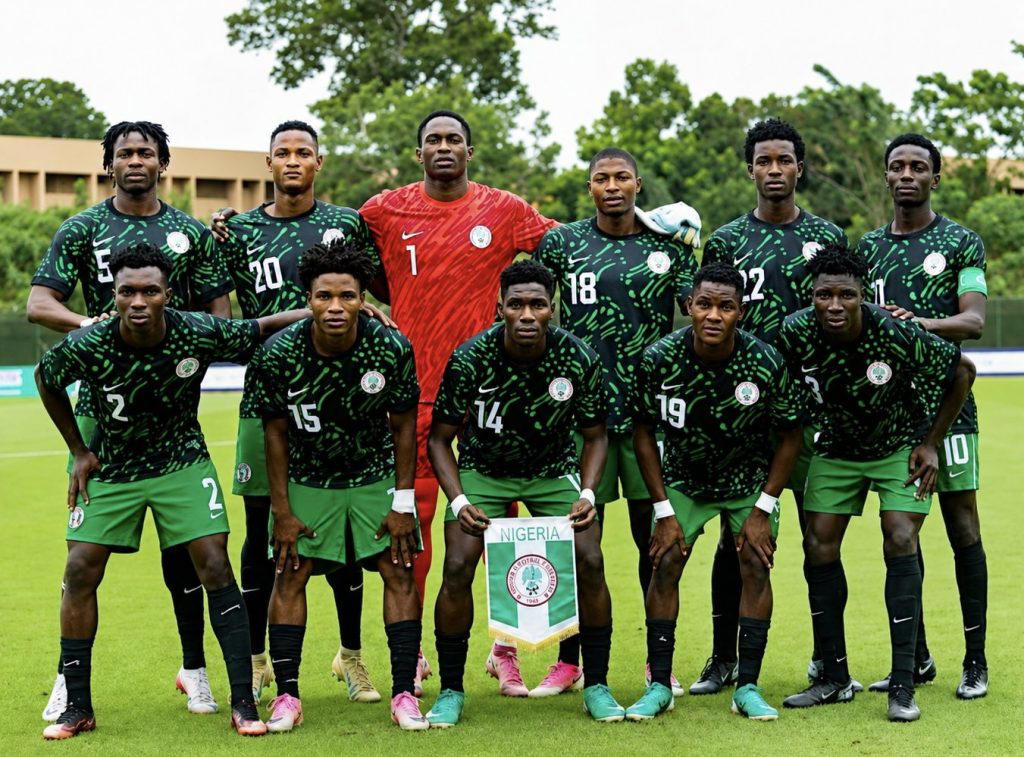
In the traditional rhythm of Nigerian life, June is the loudest month of the year. It is a season defined by the thunderous scraping of plastic chairs across concrete floors, the sharp hiss of chilled drinks being opened, and the deafening roar of hundreds of voices rising as one. This is the enduring magic of the football viewing centre — a secular cathedral where class, tribe and social status dissolve beneath the glow of a giant projector screen. Yet, as the 2026 FIFA World Cup unfolds amid the dazzling arenas of North America, many of these once-vibrant gathering places have been plunged into an unsettling quiet. Across Nigeria, reporters Affa Acho, Anayo, OnuKeugha, Abiodun Sivowaku and Abba Ibrahim Wada explored how the Super Eagles’ absence has drained the life from these cherished cultural hubs, leaving behind empty seats, fading excitement and a palpable sense of loss.
The giant screens are on. The projectors are working. The commentators’ voices echo through loudspeakers. Across Nigeria, World Cup matches are being played thousands of miles away in North America. Yet something is missing.
In Abuja, Lagos, Port Harcourt, Kano and many other cities, the familiar roar that usually accompanies football’s greatest spectacle has been replaced by an unusual quietness. Plastic chairs that would normally be occupied hours before kick-off remain empty. Food vendors wait for customers who never arrive. Viewing centre operators count losses instead of profits.
For the second consecutive World Cup, Nigeria is absent from football’s biggest stage. And while the disappointment of missing the tournament has been felt on the pitch and within the football establishment, perhaps nowhere is the impact more visible than among ordinary Nigerians whose lives, businesses and social routines have traditionally revolved around the Super Eagles during World Cup season.
The 2026 FIFA World Cup has produced drama, stunning goals and memorable performances. But for many Nigerians, the tournament feels incomplete. The country may be watching the World Cup, but it is doing so with a heavy heart.
A National Ritual Interrupted
Few events unite Nigerians quite like the World Cup. Every four years, viewing centres become temporary national theatres. Civil servants rush through work to catch the kick-off. Traders close shops early. Students gather around giant screens. Strangers celebrate together as though they have known one another for years.
The World Cup is more than football in Nigeria; it is a shared cultural experience. When the Super Eagles play, entire neighbourhoods come alive. Every attack sparks excitement. Every missed opportunity triggers collective frustration. Every goal unleashes scenes of jubilation that can shake entire streets.
That emotional connection has been absent this year following Nigeria’s failure to qualify after a painful playoff defeat to DR Congo. As participating nations showcase their squads and supporters across the globe, Nigerians were left to confront a reality few had anticipated: watching the World Cup without their own team. The result has been a dramatic shift in fan behaviour.
Abuja’s Viewing Centres Feel the Pain
In the Federal Capital Territory, the effects are impossible to miss. Wuse 2, one of Abuja’s most vibrant football districts, is usually packed during major tournaments. During previous World Cups, supporters would arrive hours before kick-off to secure seats. This year, however, many viewing centres are struggling to attract customers.
At T.B.I Lounge, operator Chijioke Nnamdi sits in a hall where empty chairs significantly outnumber patrons. “Before, people would start arriving two hours early to secure a seat,” he said. “Now I am begging people to come in for free, and they still refuse.”
According to Nnamdi, revenue has fallen by nearly 60 per cent since the tournament began.
To reduce costs, he now limits generator use to only the biggest fixtures. “The matches involving Brazil, Argentina and France still attract some people,” he explained. “But it is nothing compared to when Nigeria plays. Even a friendly involving the Super Eagles attracts more people than some World Cup games we are showing now.”
His experience reflects a wider trend. Across Abuja, many operators who traditionally rely on the World Cup as one of their most profitable periods of the year are struggling to stay afloat.
Why Nigerians Cannot Let Go
The challenge facing viewing centres is not simply about football. It is about identity. Nigerian supporters may admire international stars such as Lionel Messi or Kylian Mbappé. They may appreciate the tactical brilliance of European and South American football. But nothing compares to watching their own national team.
For many fans, emotional investment disappears once Nigeria is removed from the equation.
Adebayo, a civil servant living in Abuja, initially planned to follow the tournament closely. He watched the opening match at home before deciding to visit a viewing centre for one of the headline fixtures. The experience lasted only a short while. “I couldn’t stay,” he admitted. “It just didn’t feel the same.”
The feeling is shared by Samuel Okonkwo, a passionate supporter who once travelled from Abuja to Port Harcourt to watch a Super Eagles qualifier. Now he watches World Cup matches alone in his living room.
“What is the point?” he asked. “I am happy for Senegal, Morocco and the other African teams, but they are not my country. When the Super Eagles play, every moment matters because it is your flag and your people. Without Nigeria, there is no emotional connection.”
That sentiment has become increasingly common across social media. Nostalgic clips of Nigeria’s past World Cup campaigns continue to circulate online, accompanied by messages expressing frustration and longing. Many supporters are reliving memories rather than creating new ones.
The Hidden Victims: Small Businesses
While supporters are grappling with emotional disappointment, thousands of small-business owners are facing financial hardship. Every World Cup creates opportunities for people working in Nigeria’s informal economy.
Viewing centre operators charge entrance fees, food vendors sell meals and snacks, drink sellers record increased patronage and commercial transport operators enjoy higher demand. This year, many of those businesses are reporting sharp declines.
Outside a popular viewing centre in Gudu, Abuja, a food vendor who asked not to be named described the situation as devastating. “During previous World Cups, I could make more money in one month than I normally make in three months,” she said. “Now I am lucky if I sell ten plates of food in a night.” The explanation, she said, is simple. “The men are not coming.”
A similar story is unfolding in Garki. Madam Terry, who operates a garden-style viewing centre, says business has slowed dramatically. “Normally, I cook several times because the place fills up,” she explained. “This week, I have barely cooked once. Most people prefer to stay at home.”
The decline highlights how deeply football influences local economic activity. For many small businesses, the absence of the Super Eagles has translated directly into lost income.
Port Harcourt Defies the Trend
Not every city has experienced the same level of decline. In Port Harcourt, some operators report relatively strong attendance despite Nigeria’s absence.
Viewing centre owner Chika James acknowledged that patronage would undoubtedly be higher if the Super Eagles were participating. Nevertheless, football lovers continue to turn up.
Speaking with LEADERSHIP Sunday Sports in Port Harcourt, James said that although his centre is still ranked among the highest patronage centres in the ongoing World Cup, he believes it would have been higher if Nigeria had participated.
Also speaking to LEADERSHIP Sunday Sports, manager of a viewing centre located in the Old Port Harcourt Township, Nsikak Sunday said, despite Nigeria’s absence, football lovers still troop to the centre to watch the ongoing World Cup.
“Nigeria’s absence at the World Cup is really affecting the turnout of people at this viewing centre because it will be more lovely to watch your brothers playing at the big stage. But since Nigeria did not make it, we still have some African brothers playing at the World Cup, which is attracting a lot of people to this centre.
“Also, people always like to watch our Nigerian brothers and see their performance, even though they are playing for other countries.
“Since the World Cup started, patronage in this centre has really been huge because of the big matches and star players in the World Cup. Most nights, we go out to rent extra chairs in order to accompany the crowd that are coming to watch the match here,” Sunday said.
“People would naturally prefer to watch their own country. But fans are still coming because other African teams are playing, and many Nigerians also want to watch Nigerian-born players representing different countries.”
According to him, some matchdays have attracted such large crowds that additional chairs had to be rented.
His experience reminds us that while the Super Eagles are central to Nigerian football culture, the World Cup’s wider appeal remains strong.
Lagos: Home Viewing Takes Over
In Lagos, however, another factor is influencing viewing habits. The time difference between Nigeria and the World Cup host countries means many matches are being played late at night or during the early hours of the morning.
For many supporters, travelling to viewing centres at such times is simply not practical.
Gabriel Umeh, a resident of Iyana-Paja, says he now watches matches on his phone. “Some games start at 11 p.m., 2 a.m. or even 5 a.m.,” he said.
“Security is a concern, and there is no reason to risk travelling around at those hours.”
At a viewing centre near Shogunle in Oshodi, the Operator said he had opened only twice since the tournament began. “This place would be packed if Nigeria had qualified,” he said. “Now I struggle to make enough money to cover fuel costs.”
He revealed that daily earnings have dropped dramatically, from more than N30,000 on busy football nights to just a few thousand naira.
The challenge is compounded by competition from betting shops and streaming platforms, many of which offer free access to matches.
“Football lovers have stopped coming because Nigeria is not participating in the tournament.” Had Nigeria qualified, everywhere would have been filled up. People don’t take the World Cup seriously. But a few with a passion for the game still come around, which only makes me show matches involving African teams that start around 8 pm.
He said, “I can’t buy fuel worth N4,000 and use it to show any match; I won’t recover the cost. It’s not advisable,” he said. “When Premiership clubs play, this place is usually filled up. I even have an overflow extension. On big-team days, I make between N32,000 and N35,000. Now, I’m struggling to make N3,000 or N4,000. I spend it on fuel.”
Asked whether he reduced prices to attract customers, he said he charges N300 per match, down from the usual N500 in the area. “I’m competing with betting shops that show football for free. “So, I can’t increase the price. I’ve been charging N300 since fuel was N500 per litre. If I raise it, people will leave.”
Operator at another centre in Shogunle, Oshodi, Niyi Adeogun, said low viewership is typical at the start of major tournaments, especially when the teams playing are low-ranked teams. More so, fans can watch from home with a light and a subscription.
“But when the competition reaches the knockout stages, especially when big teams face each other like France vs England or Argentina vs Portugal, turnout spikes. He also said Nigeria’s absence from the tournament has affected attendance.
On pricing, he said cost isn’t the main issue, but the experience matters. “When people turn up, there’s joy you don’t get at home. I’m not collecting money now because no one has turned up. I burn fuel and pay for subscriptions, but I let them watch for free. When the knockout stage begins, I’ll start charging. Turnout will rise. People will come from left and right.”
Kano Fans Keep the Faith
In Kano, football passion remains strong despite the disappointment. Many supporters insist they will continue watching regardless of Nigeria’s absence.
Taufeeq Musa Mohammad says his love for football goes beyond national allegiances. “I am disappointed Nigeria did not qualify,” he said. “But football is one of my passions.”
Others point to their attachment to international stars and clubs. Ahmad Kaita, for example, continues to follow Argentina because of his admiration for Lionel Messi.
However, even among dedicated fans, viewing habits have changed. “Since Nigeria is not participating, I decided to watch the games at home,” he said.
The Living Room Revolution
Ironically, while viewing centres are struggling, electronics retailers are benefiting.
Following Nigeria’s elimination, many Nigerians invested in larger television sets and streaming devices, choosing to create their own home viewing experiences. For some supporters, home viewing offers greater comfort, lower costs and increased safety.
Yet many acknowledge that something important has been lost. Football has always been about community.
A dramatic goal celebrated alone in a living room rarely matches the excitement of sharing the moment with dozens of fellow supporters. The World Cup experience in Nigeria has traditionally been collective and this year feels different.
A Nation Waiting for Its Eagles
Sports analyst Tunde Abiodun believes the silence surrounding the World Cup reflects a deeper issue. “Football is our escape. It is one of the few things that genuinely unites Nigerians.”
For a country navigating economic hardship, inflation and social challenges, football often provides a rare source of collective joy.
“When the Super Eagles play, everyone becomes Nigerian first. That feeling is difficult to replace,” he added.
As the tournament moves towards the knockout stages, viewing centre operators hope the biggest matches will attract larger crowds. History suggests attendance will improve as the stakes increase.